Wrongful Accusation in Poland: No Compensation, No Justice, No Recourse
In Poland, you can spend years under criminal investigation, lose your reputation, your livelihood, your health—and if the state was wrong, you’re owed nothing.
In 2012, a man walked out of a Polish detention facility after twelve years and three months of what the law euphemistically calls “temporary” arrest. He had been accused of murder. He was acquitted. The word “temporary,” in his case, had covered a span roughly equivalent to the time it takes to raise a child from infancy to middle school. What compensation did the state offer for this spectacular miscalculation? That depends on the details—but for the vast majority of Poles who endure years under criminal suspicion only to be cleared, the answer, under current law, is nothing at all.
Poland’s Code of Criminal Procedure, in its Chapter 58, provides a mechanism for seeking damages in cases of wrongful conviction, unlawful pretrial detention, or unjustified arrest. What it does not provide—conspicuously, stubbornly—is any remedy for those who were wrongly charged or wrongly accused but never formally convicted. The distinction may sound technical. It is, in human terms, anything but.
Consider the arithmetic. In a survey of Polish prosecutors conducted in the summer of 2022—the first study of its kind directed at this particular professional group—researchers Jędrzej Kupczyński, a prosecutor in the Warsaw Regional Prosecutor’s Office, and Bruno Reich, a legal trainee, found that the overwhelming majority of respondents (95.6 per cent) estimated that wrongful convictions occur in five per cent or fewer of all criminal cases. More than half put the figure at one per cent. In a country that processed roughly 1.1 million criminal cases in 2022, even the conservative estimate yields a staggering number: approximately eleven thousand wrongful convictions in a single year. And that figure accounts only for cases that reach a verdict. The universe of wrongful charges and wrongful accusations—cases that end in acquittal or dismissal before a conviction is ever entered—remains, statistically, a black box. No comparable empirical data exist.
What we do know is this: between 2000 and 2022, Polish courts awarded compensation for wrongful conviction to six hundred and thirty-two individuals. Separate damages for moral harm were granted to three hundred and five people between 2009 and 2022. These numbers, drawn from Ministry of Justice statistics, represent the sum total of the state’s formal acknowledgment that it got things wrong—across more than two decades, in a country of thirty-eight million.
The Polish Constitution enshrines the presumption of innocence. In theory, no one may be deemed guilty until a final, binding court judgment says so. In practice, the act of being charged—of having the state formally declare that it suspects you of a crime—carries a gravitational weight that no subsequent acquittal can fully reverse. This is especially true when the press gets hold of it, as the press tends to do. In the popular imagination, the distinction between “charged” and “convicted” is vanishingly thin. “They wouldn’t have charged him if there weren’t something there” is a sentiment as old as criminal law itself, and no less corrosive for its ubiquity.
The damage compounds with time. In Poland’s multi-threaded economic and fiscal criminal cases, proceedings routinely stretch across years. A person may live under the shadow of accusation for the better part of a decade. Careers are derailed. Relationships fracture. Health deteriorates—not from the conditions of confinement, but from the slow, grinding anxiety of indefinite legal jeopardy. And when, at last, the court pronounces the word “acquitted,” the system offers these people precisely the same thing it offered them on the day they were charged: nothing.
The Ombudsman for Citizens’ Rights—the Rzecznik Praw Obywatelskich, a constitutional officer roughly analogous to a national civil-liberties watchdog—has for years urged the Ministry of Justice to close this gap. The argument, as articulated in the Ombudsman’s most recent formal intervention, dated January 19, 2026, rests on a straightforward legal observation: the moment a criminal investigation shifts from the “in rem” phase (an investigation into the matter) to the “in personam” phase (an investigation against a specific individual), the consequences for that individual are immediate, concrete, and often devastating. Professor Ryszard A. Stefański, a criminal-law scholar cited in the Ombudsman’s petition, has described these consequences as economic, social, political, and moral—with the loss of trust and good name being the most grievous among them.
The Kupczyński and Reich study, published in the journal Prokuratura i Prawo in 2024, offers an unusually candid window into how Poland’s prosecutors—the very professionals responsible for bringing charges—perceive the system’s fallibility. The researchers distributed questionnaires to a hundred and fourteen active prosecutors serving at district, regional, and appellate levels, with over half reporting more than ten years of professional experience. They also surveyed a control group of a hundred and forty-five university students, creating a revealing contrast between insider and outsider perspectives.
The results are illuminating in their dissonance. Asked to identify the most common causes of wrongful convictions, prosecutors pointed first to so-called “tunnel vision” on the part of law enforcement—the tendency to lock onto a single theory of events and filter all evidence through that lens—followed, almost identically, by misidentification by eyewitnesses. False testimony by witnesses of the crime ranked third. When it came to assigning professional responsibility, eighty-five per cent of prosecutors pointed to other professional groups: police officers bore the brunt of the blame (46.8 per cent), followed by judges (32.4 per cent). Only 14.4 per cent of prosecutors identified their own colleagues as the primary source of error. (Defense attorneys, perhaps tellingly, were cited by a mere 6.3 per cent.)
The students saw things differently—and more darkly. They estimated the rate of wrongful convictions at an average of 12.8 per cent, compared with the prosecutors’ 2.2 per cent. Their median estimate was ten per cent, a full order of magnitude above the prosecutors’ median of one per cent. Some students ventured as high as fifty per cent. They were also far more inclined to blame prosecutors (30.3 per cent, compared with 14.4 per cent among prosecutors themselves) and offered, in their open-ended responses, a litany of structural indictments: “deliberate actions by law enforcement,” “failure to apply the principle of in dubio pro reo,” “politicized judges and prosecutors,” “the need to convict someone—anyone—and public opinion.”
One finding united both groups: the preparatory phase of criminal proceedings—the investigation stage, before a case reaches a courtroom—is where the most consequential errors occur. Among prosecutors, 53.2 per cent said errors at this stage “often” led to wrongful convictions, and an additional eighteen per cent said “always.” The students were even more emphatic. This convergence matters, because it suggests a shared understanding—across the professional divide—that the system’s most dangerous failures happen long before a judge enters the picture.
The Ombudsman’s proposed remedy is neither radical nor novel. It would extend the existing compensation framework in Chapter 58 of the Code of Criminal Procedure—which already covers wrongful convictions, unlawful pretrial detention, and unjustified arrest—to include cases of manifestly unjustified charges and manifestly unjustified accusations. To guard against abuse, the proposal would require claimants to demonstrate procedural initiative: a suspect who, after six months under formal charges, files a motion for dismissal, and who is subsequently acquitted or whose case is subsequently dropped, would be eligible to seek damages from the state.
The Ombudsman’s January 2026 intervention identifies four structural reforms that would need to accompany such a change: the introduction of a right to challenge the legal classification of charges brought by a prosecutor (currently, judicial review of charges occurs only incidentally, when courts consider related motions such as requests for pretrial detention); oversight of the moment at which an investigation transforms from an inquiry into events to an inquiry into a person; review of the justification for maintaining charges in cases that drag on for years; and an expansion of the grounds on which damages may be sought from the state treasury.
In February 2025, the Ministry of Justice acknowledged the Ombudsman’s proposals and referred them to the Criminal Law Codification Commission. The sole concrete result thus far has been a partial acceptance of the proposal to extend the statute of limitations for compensation claims under Article 555 of the Code from one year to three—a change included in a pending amendment bill. The Commission has announced plans to undertake a comprehensive revision of Chapter 58 sometime in 2026. In the meantime, the gap in the law persists, and the people it harms continue to accumulate.
The constitutional argument for reform is, on its face, unanswerable. Article 2 of the Polish Constitution establishes the principle of the democratic rule of law—a principle that, in the jurisprudence of Poland’s Constitutional Tribunal, requires the state to remedy any harm caused by the unlawful actions of its officials. The absence of a dedicated compensation mechanism for wrongful charges and accusations sits in plain tension with this obligation.
There is, theoretically, a civil-law route. A person wrongly accused can attempt to sue the state for damages in an ordinary civil proceeding. In practice, this path is expensive, onerous, and—most critically—governed by a standard of unlawfulness that Polish courts have interpreted as significantly more demanding than the “manifest unjustness” standard that applies to wrongful-conviction claims under Chapter 58. The result is a paradox worthy of Kafka: the state acknowledges, in its criminal-procedure code, that some forms of prosecutorial error warrant compensation, but it sets the bar for the most common form of such error—the wrongful accusation itself—so high that almost no one can clear it.
The Ombudsman’s proposal would not require the creation of an entirely new legal procedure. It could be modeled on the existing framework for wrongful-conviction claims, a structure that Polish courts already know how to administer. And it would serve not only a compensatory function but a preventive one—an incentive, subtle but real, for prosecutors to exercise greater care in formulating charges and greater restraint in maintaining them.
One of the prosecutors who participated in the Kupczyński and Reich survey offered a remark that could serve as an epitaph for the current system: “Unfortunately, clearing a wrongly convicted person requires far more work than convicting them in the first place.” The same asymmetry—between the ease of accusation and the difficulty of vindication—defines the experience of those who are charged but never convicted. They carry the weight of the state’s error without any recognized claim to relief. The law, in its present form, treats their suffering as an externality—a cost of doing justice that no one, apparently, is obliged to pay.
Until Poland addresses this gap, the presumption of innocence will remain, for a meaningful number of its citizens, an abstraction—a principle honored in the Constitution and betrayed in practice, one wrongful accusation at a time. ♦
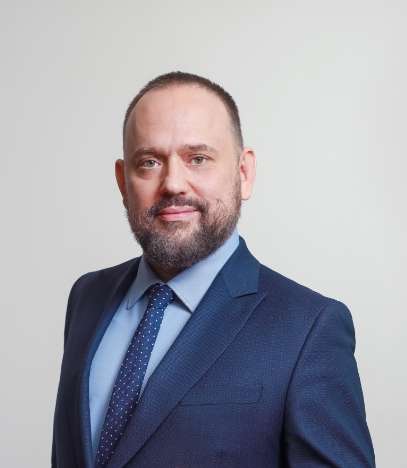
Founder and Managing Partner of Skarbiec Law Firm, recognized by Dziennik Gazeta Prawna as one of the best tax advisory firms in Poland (2023, 2024). Legal advisor with 19 years of experience, serving Forbes-listed entrepreneurs and innovative start-ups. One of the most frequently quoted experts on commercial and tax law in the Polish media, regularly publishing in Rzeczpospolita, Gazeta Wyborcza, and Dziennik Gazeta Prawna. Author of the publication “AI Decoding Satoshi Nakamoto. Artificial Intelligence on the Trail of Bitcoin’s Creator” and co-author of the award-winning book “Bezpieczeństwo współczesnej firmy” (Security of a Modern Company). LinkedIn profile: 18 500 followers, 4 million views per year. Awards: 4-time winner of the European Medal, Golden Statuette of the Polish Business Leader, title of “International Tax Planning Law Firm of the Year in Poland.” He specializes in strategic legal consulting, tax planning, and crisis management for business.